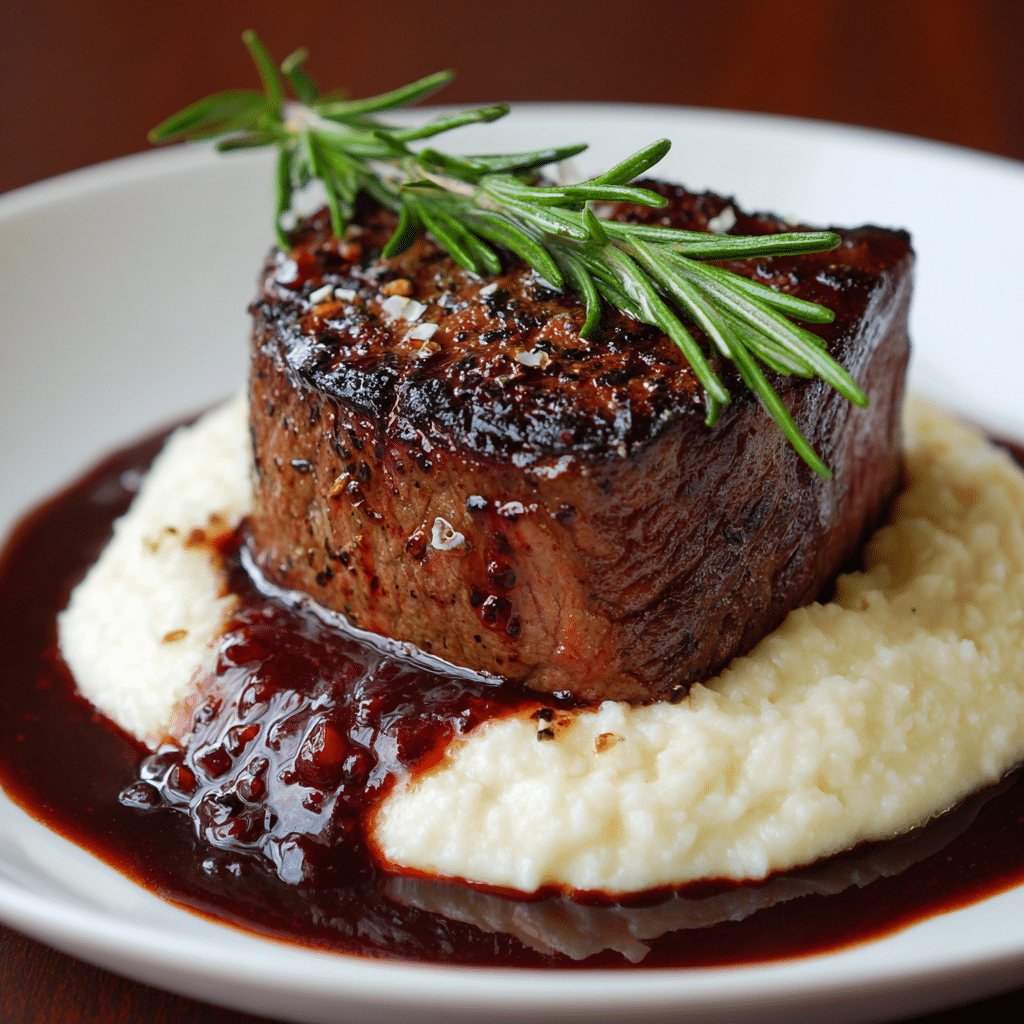
Beef Tenderloin with Red Wine Reduction Recipe
If you are looking to impress with a dish that balances elegance, flavor, and a touch of gourmet flair, the Beef Tenderloin with Red Wine Reduction is your perfect go-to. This recipe brings out the tender juiciness of the beef with a beautifully caramelized crust, while the shimmering red wine reduction sauce enriches each bite with sweet, savory notes that simply linger on the palate. Whether you are celebrating a special occasion or craving a decadent dinner at home, this dish combines simplicity and sophistication in one unforgettable plate.
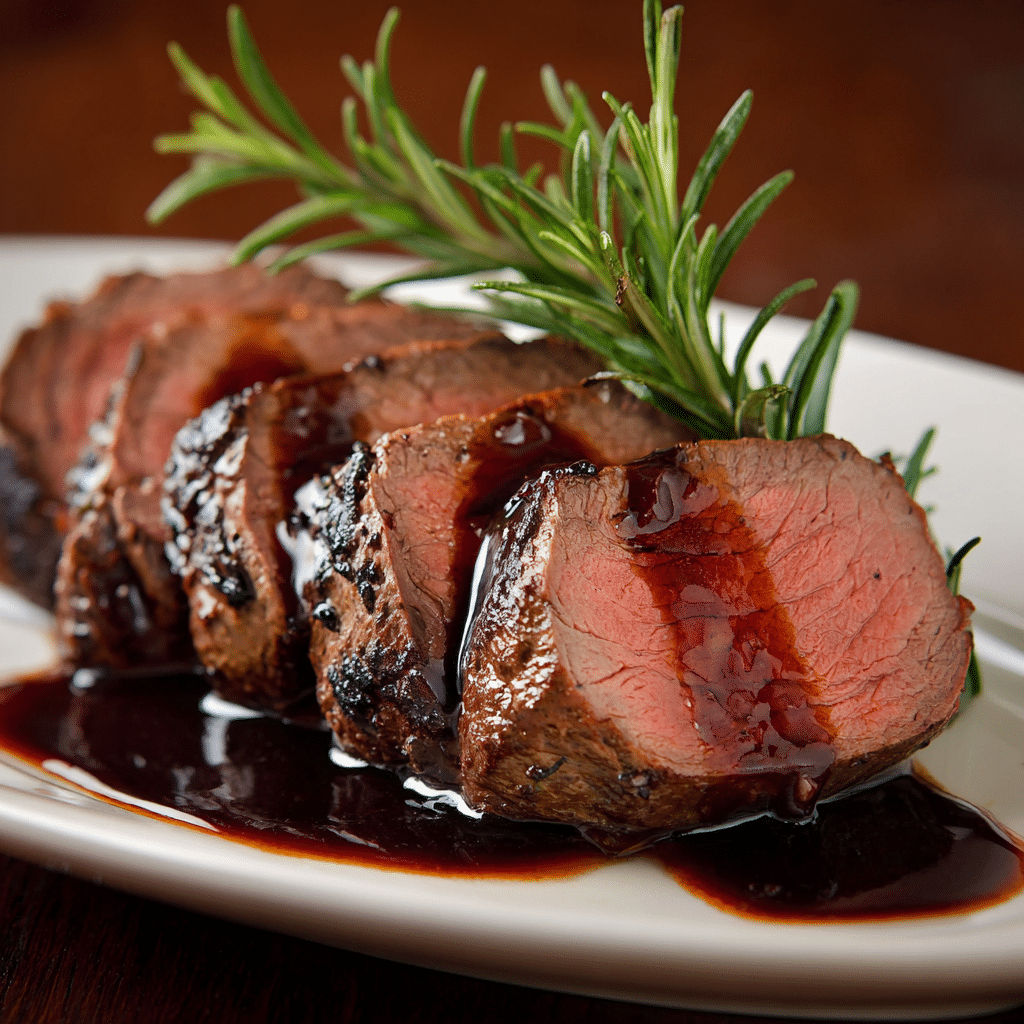
Ingredients You’ll Need
With just a handful of essential ingredients, this recipe focuses on quality and balance. Each element has a distinct role, whether it’s building the tenderloin’s decadent flavor or creating a velvety sauce that harmonizes perfectly with the meat.
- Beef tenderloin steaks: Choose well-marbled, thick cuts for optimal tenderness and a juicy interior.
- Salt and freshly ground black pepper: Simple seasonings that enhance the natural beef flavor and create a savory crust.
- Olive oil: For a perfect sear that locks in juices with a golden-brown crust.
- Butter: Adds richness and depth when finishing the sear and enriching the sauce.
- Fresh thyme sprigs: Introduces a subtle herbal aroma that complements the beef and wine.
- Shallots: Finely chopped to provide sweetness and complexity in the red wine reduction.
- Red wine: Use a dry variety like Cabernet Sauvignon or Merlot to make a glossy, flavorful reduction sauce.
- Beef stock: Deepens the sauce’s body and balances the acidity of the wine.
- Honey or a touch of sugar (optional): To gently mellow out the wine’s acidity and add a hint of sweetness.
How to Make Beef Tenderloin with Red Wine Reduction
Step 1: Preparing the Beef Tenderloin
Begin by patting your beef tenderloin steaks dry with paper towels — this step is crucial for achieving that coveted golden crust. Generously season both sides with salt and freshly ground black pepper. Let them sit at room temperature for about 10 minutes to ensure even cooking.
Step 2: Searing the Tenderloin
Heat a heavy skillet over medium-high heat and add olive oil. When the oil shimmers, carefully place the steaks in the pan and sear without moving them for about 3 to 4 minutes on each side, depending on thickness. Add butter and fresh thyme to the pan during the final minute and tilt the pan to spoon the melted butter over the meat repeatedly to infuse flavor and moisture.
Step 3: Resting the Meat
Once perfectly seared, transfer the beef tenderloins to a warm plate and tent loosely with foil to rest for 10 minutes. This resting period allows juices to redistribute, guaranteeing a tender and juicy bite every time.
Step 4: Making the Red Wine Reduction
In the same skillet, reduce the heat to medium and add finely chopped shallots. Sauté until softened and fragrant, about 2 minutes. Pour in the red wine, scraping up any browned bits from the pan to deepen the flavor. Add beef stock and bring to a gentle simmer. Let the sauce reduce by half, thickening to a luscious consistency. For balance, stir in a small spoonful of honey if desired. Finish the sauce by whisking in a tablespoon of cold butter to give it a glossy sheen and rich mouthfeel.
How to Serve Beef Tenderloin with Red Wine Reduction
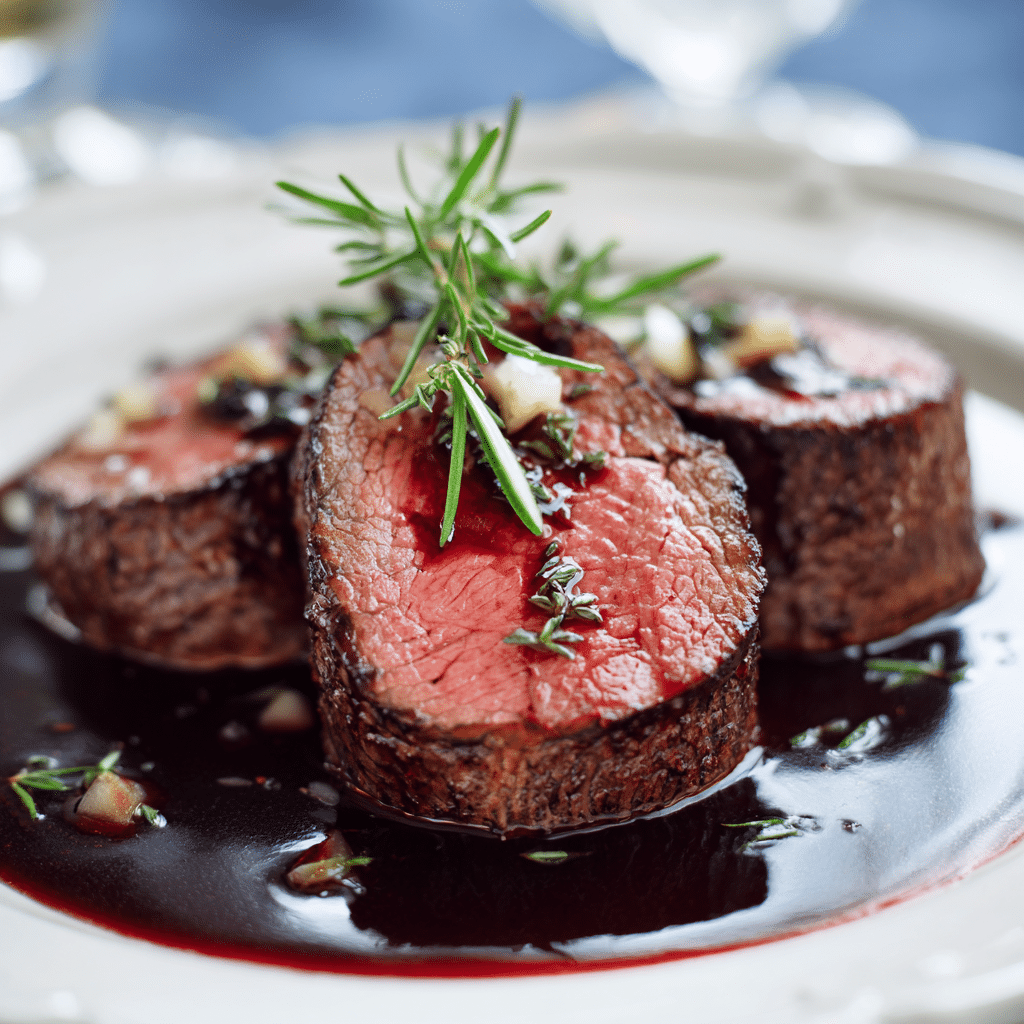
Garnishes
Enhancing your beef tenderloin presentation is all about subtle accents. Fresh thyme sprigs or a sprinkle of finely chopped parsley add a lively touch of green, providing contrast to the richness of both the meat and the deep red wine sauce.
Side Dishes
The Beef Tenderloin with Red Wine Reduction pairs beautifully with creamy mashed potatoes or roasted root vegetables like carrots and parsnips, balancing tender meat with earthy or buttery sides. A crisp green salad or steamed asparagus can also introduce freshness to the plate.
Creative Ways to Present
For an elevated dining experience, slice the tenderloin thinly and fan the slices atop a pool of the rich red wine reduction on each plate. Drizzle the sauce artistically and place a fresh thyme sprig for elegance. Consider serving on warm plates to maintain temperature and impress your guests with both flavor and style.
Make Ahead and Storage
Storing Leftovers
Once cooled to room temperature, wrap any leftover beef tenderloin tightly in aluminum foil or store in an airtight container. Refrigerate and consume within 2 to 3 days to enjoy it at its best without sacrificing texture or taste.
Freezing
For longer storage, wrap the cooked tenderloin securely in plastic wrap and place it in a freezer-safe bag or container. Freeze for up to 2 months. The red wine reduction sauce can be frozen separately in an airtight container, which helps preserve the fresh flavors.
Reheating
Reheat the beef gently in a low oven (around 275°F/135°C) wrapped in foil to prevent drying out. Warm the red wine reduction sauce in a small saucepan over low heat, stirring occasionally until just heated through, so it retains its silky texture and rich taste.
FAQs
Can I use a different cut of beef for this recipe?
While beef tenderloin is prized for its tenderness and mild flavor, you can substitute filet mignon or a well-marbled strip steak. Just keep in mind that cooking times and texture may vary slightly.
What type of red wine should I use for the reduction?
Choose a dry red wine like Cabernet Sauvignon, Merlot, or Pinot Noir. Avoid sweet wines or cooking wines as they can overpower the sauce with excessive sweetness or artificial flavors.
Is the red wine reduction sauce difficult to make?
Not at all! It’s simply a matter of simmering wine and beef stock with shallots until thickened, then finishing with butter. The key is to reduce it slowly to concentrate flavors without burning.
How can I tell when the beef tenderloin is cooked perfectly?
For medium-rare, which is ideal for tenderloin, aim for an internal temperature of about 130°F (54°C). Using a meat thermometer ensures precise doneness and retains juiciness.
Can I make this recipe gluten-free?
Absolutely! The ingredients used here are naturally gluten-free. Just double-check your beef stock and wine labels to ensure no hidden gluten additives.
Final Thoughts
There is something truly special about sharing a beautifully cooked Beef Tenderloin with Red Wine Reduction that makes any meal memorable. Its combination of tender, flavorful beef and a luxurious sauce is bound to impress everyone around your table. Don’t hesitate to try this recipe—once you taste the rich flavors and see the stunning presentation, it may just become one of your cherished go-to dishes for celebrations and cozy dinners alike.