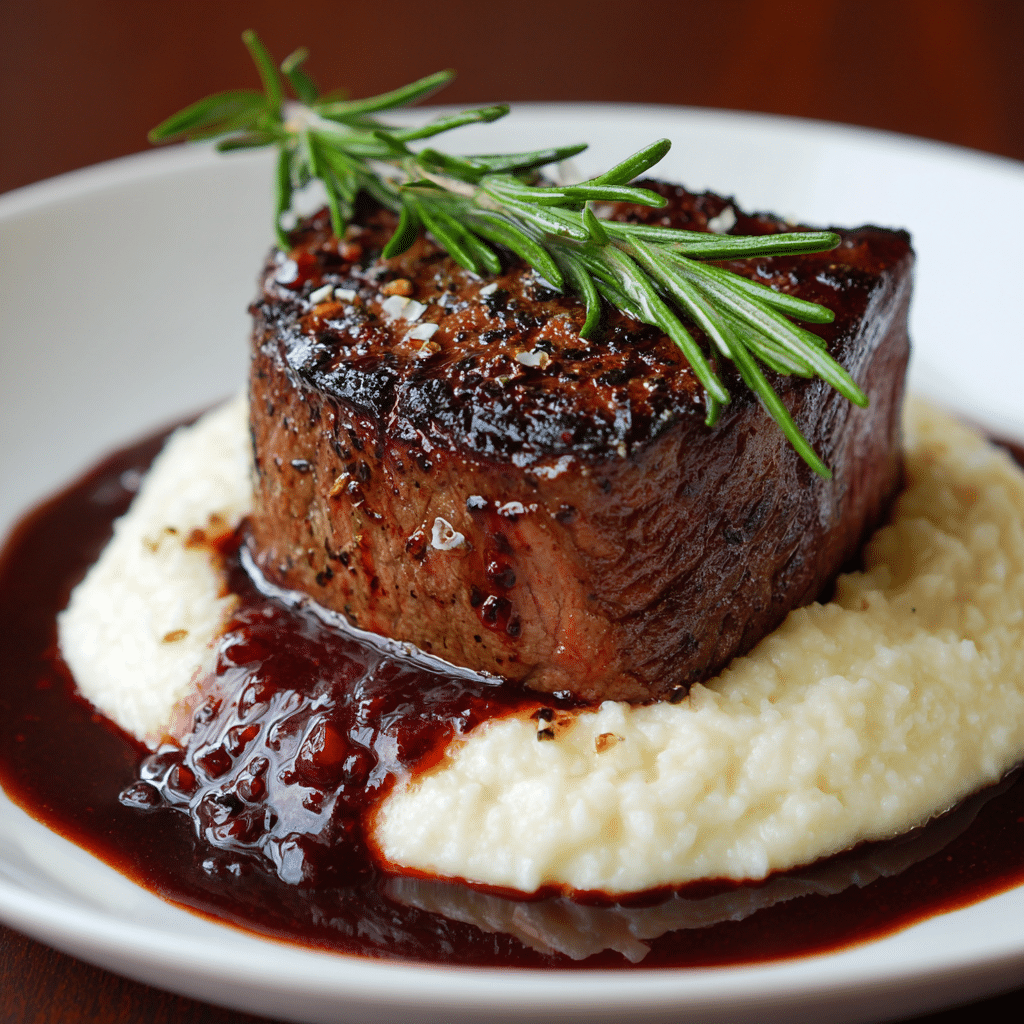
Beef Tenderloin with Red Wine Reduction Recipe
“`html
If you’re looking to impress with a dish that brings restaurant-level sophistication right into your own kitchen, this Beef Tenderloin with Red Wine Reduction is an absolute showstopper. Imagine tender, juicy slices of beef, seared to a perfect crust, paired with a glossy, fragrant red wine sauce that’s slightly sweet and deeply flavorful. It’s a dish that feels special but is surprisingly approachable, marrying simple ingredients with precise technique to create something truly memorable. Whether it’s a festive family dinner or an intimate celebration, the rich, ruby hues and intoxicating aromas make every bite an experience worth savoring.
Ingredients You’ll Need
Getting the perfect Beef Tenderloin with Red Wine Reduction depends on a handful of simple, quality ingredients. Each one plays a crucial role: the beef provides tender, succulent meat; the wine brings acidity and complexity; and the herbs and butter add layers of aroma and silkiness to the sauce.
- Beef tenderloin (center-cut): Choose a fresh, well-marbled piece for maximum tenderness and flavor.
- Salt and freshly ground black pepper: Essential for seasoning and enhancing the natural flavors of the beef.
- Olive oil: Used for searing the beef brilliantly, creating that irresistible crust.
- Unsalted butter: Adds richness and helps finish the sauce with a silky texture.
- Fresh thyme sprigs: Offers an earthy fragrance that complements both meat and wine beautifully.
- Shallots: Finely chopped for a subtle sweetness in the reduction sauce.
- Dry red wine: The heart of the sauce, providing acidity, depth, and a gorgeous color.
- Beef stock or broth: Enhances the sauce’s savory base and balances the wine’s sharpness.
How to Make Beef Tenderloin with Red Wine Reduction
Step 1: Preparing and Seasoning the Beef
Start by patting your beef tenderloin dry with paper towels—this helps achieve a beautiful sear. Generously season all sides with salt and freshly ground black pepper, pressing the seasoning gently into the meat. This simple step builds the foundation of flavor that will carry through the entire dish.
Step 2: Searing the Tenderloin
Heat olive oil in a heavy skillet over medium-high heat until shimmering. Place the tenderloin in the pan and sear without moving it for about 3-4 minutes per side, until each side forms a deep golden-brown crust. This caramelization seals in the juices and creates those irresistible savory notes you’ll crave.
Step 3: Roasting to Desired Doneness
Transfer the seared tenderloin to a preheated oven at 400°F (200°C). Roast until the internal temperature reaches 130°F (54°C) for medium-rare, which usually takes about 10-15 minutes depending on thickness. Resting the meat afterward is crucial to allow juices to redistribute and keep it tender.
Step 4: Making the Red Wine Reduction
While the beef rests, return the skillet to the stove and add a touch more olive oil if needed. Sauté finely chopped shallots and fresh thyme until softened and fragrant. Pour in the dry red wine, scraping up any browned bits stuck to the pan—this is flavor gold. Add beef stock and simmer gently until the sauce reduces by half and coats the back of a spoon, then swirl in cold butter to create a glossy, rich finish.
Step 5: Slicing and Serving
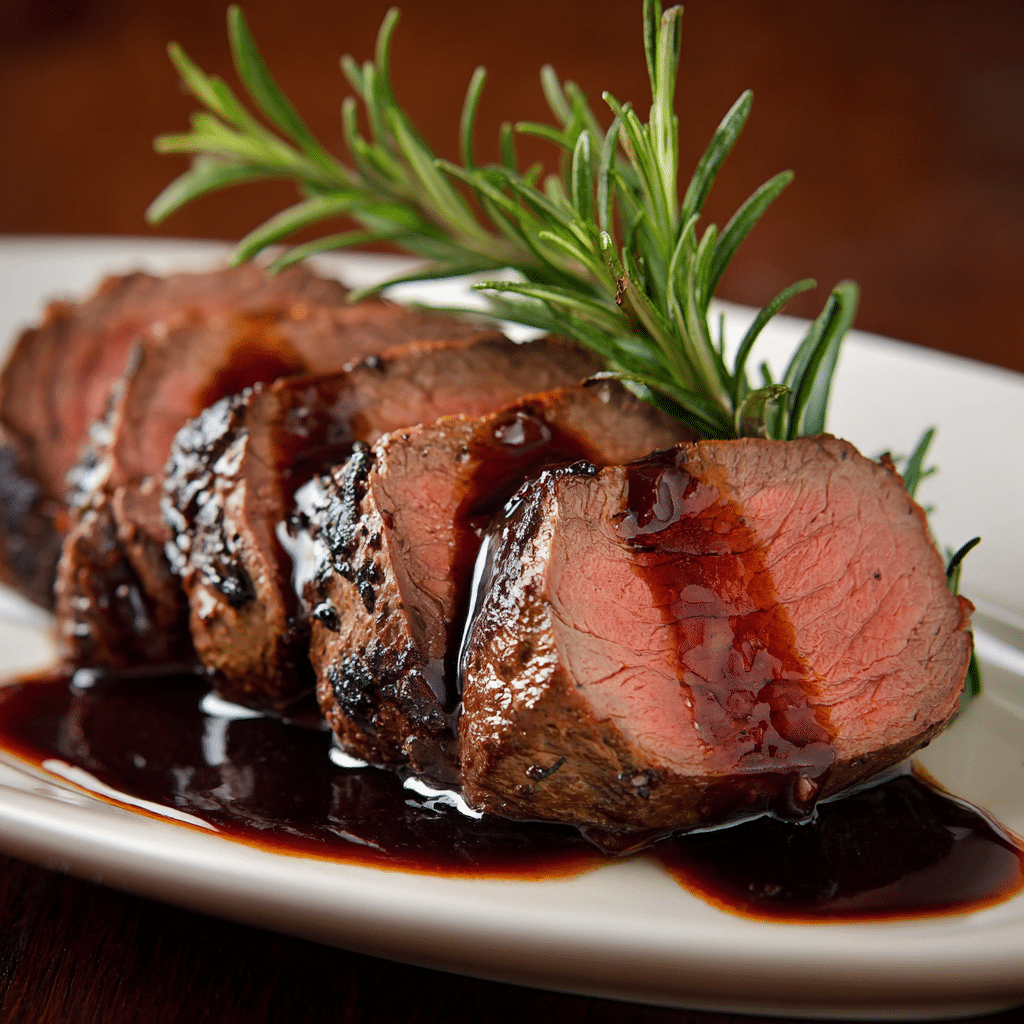
Slice the rested tenderloin thinly against the grain for maximum tenderness and arrange on a warm plate. Spoon a generous amount of the red wine reduction over the beef, letting the deep ruby hues pool beautifully around each slice, promising every bite is dripping with luxurious flavor.
How to Serve Beef Tenderloin with Red Wine Reduction
Garnishes
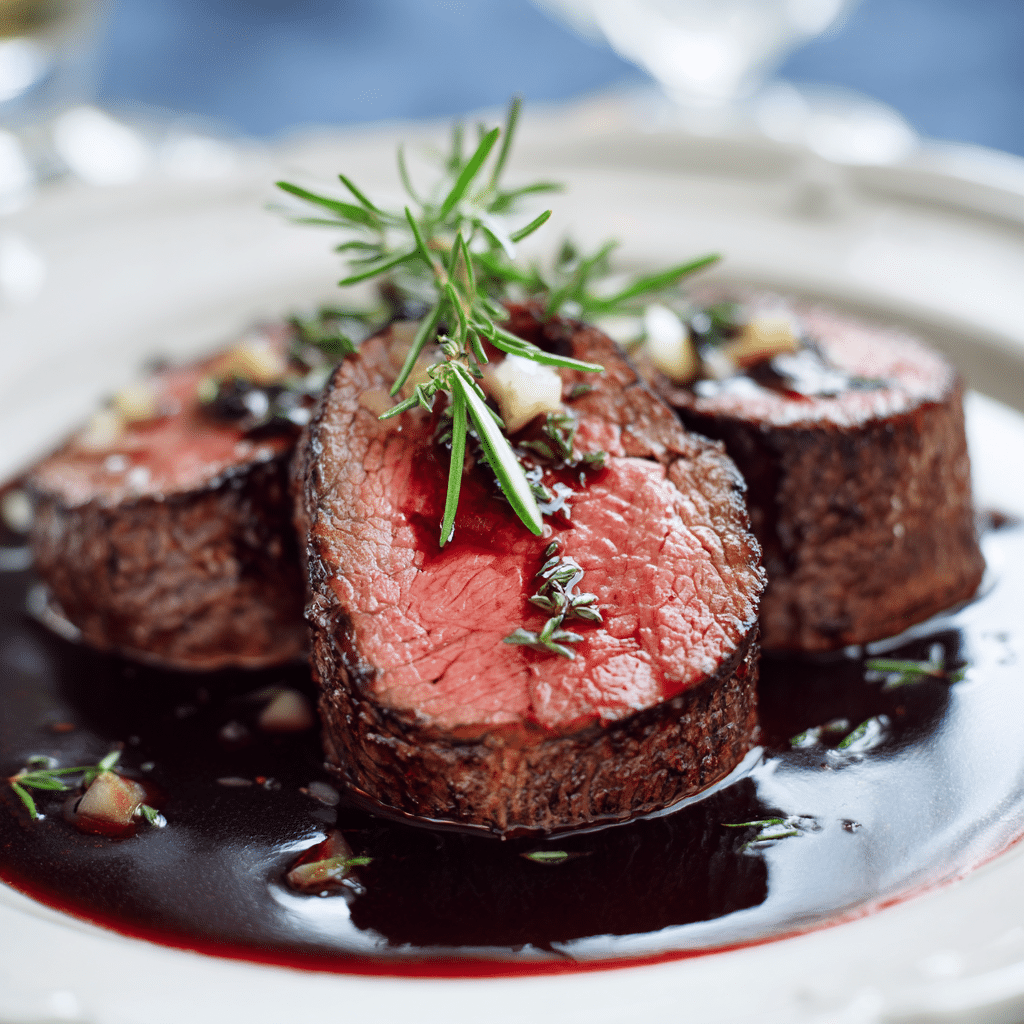
Fresh sprigs of thyme or a light sprinkle of chopped parsley add a pop of green and bring a fresh herbal aroma that complements the richness of the beef and sauce. A few crispy shallot rings or a dusting of cracked black pepper on top can enhance the presentation and offering of textures.
Side Dishes
This Beef Tenderloin with Red Wine Reduction shines alongside creamy mashed potatoes or buttery sautéed mushrooms, both perfect for soaking up every last drop of sauce. Roasted seasonal vegetables like asparagus or glazed carrots add color and a gentle sweetness to balance the robust flavors. For a more elegant touch, consider a simple risotto or a wild rice pilaf.
Creative Ways to Present
If you want to elevate the experience, serve the tenderloin sliced on individual plates with a drizzle of reduction in artistic swirls. Alternatively, present the whole roast on a wooden board surrounded by fresh herbs and small bowls of sauce for a rustic, family-style feast that invites sharing and conversation.
Make Ahead and Storage
Storing Leftovers
Leftover Beef Tenderloin with Red Wine Reduction keeps beautifully in an airtight container in the refrigerator for up to 3 days. Store the beef and sauce separately if possible to maintain the tenderloin’s texture and reheat evenly.
Freezing
You can freeze cooked tenderloin slices, wrapped tightly in plastic wrap and foil, for up to 2 months. The sauce freezes well in a separate container. Thaw slowly overnight in the fridge before reheating to preserve the delicate texture of the beef.
Reheating
Reheat gently on low heat in a covered skillet or in the oven at 275°F (135°C), adding a splash of water or stock to keep the meat moist. Warm the red wine reduction in a small saucepan over low heat, stirring occasionally, so both components come together beautifully without losing their charm.
FAQs
What cut of beef is best for this recipe?
The center-cut of beef tenderloin is ideal for this dish because it’s extremely tender and cooks evenly, making it perfect for pan-searing and roasting.
Can I use other types of wine for the reduction sauce?
Dry red wines like Cabernet Sauvignon or Merlot work best, as they provide a rich, deep flavor without overpowering the tenderloin. Avoid sweet dessert wines, which can make the sauce too sugary.
How do I know when the beef tenderloin is cooked to medium-rare?
Use an instant-read meat thermometer and look for an internal temperature around 130°F (54°C). The beef will continue to cook slightly as it rests, reaching the perfect medium-rare.
Is it okay to prepare the sauce ahead of time?
You can prepare the red wine reduction up to a day in advance and gently reheat it when ready to serve. Just be sure to whisk in fresh butter at the last moment for that glossy finish.
Can this recipe be doubled for a larger gathering?
Absolutely! Just ensure your pan and oven space accommodate the larger tenderloin, and adjust cooking times as needed. The red wine reduction sauce scales up beautifully without losing flavor intensity.
Final Thoughts
If you’ve been searching for a dish that combines elegance with warmth and unforgettable flavor, this Beef Tenderloin with Red Wine Reduction is your new go-to. It’s a recipe that brings people together, stirring anticipation with its aromas and delighting every palate with its tender meat and luxurious sauce. So grab your skillet, pour a glass of your favorite red wine, and dive into the joy of making something truly special for those you love.
“`