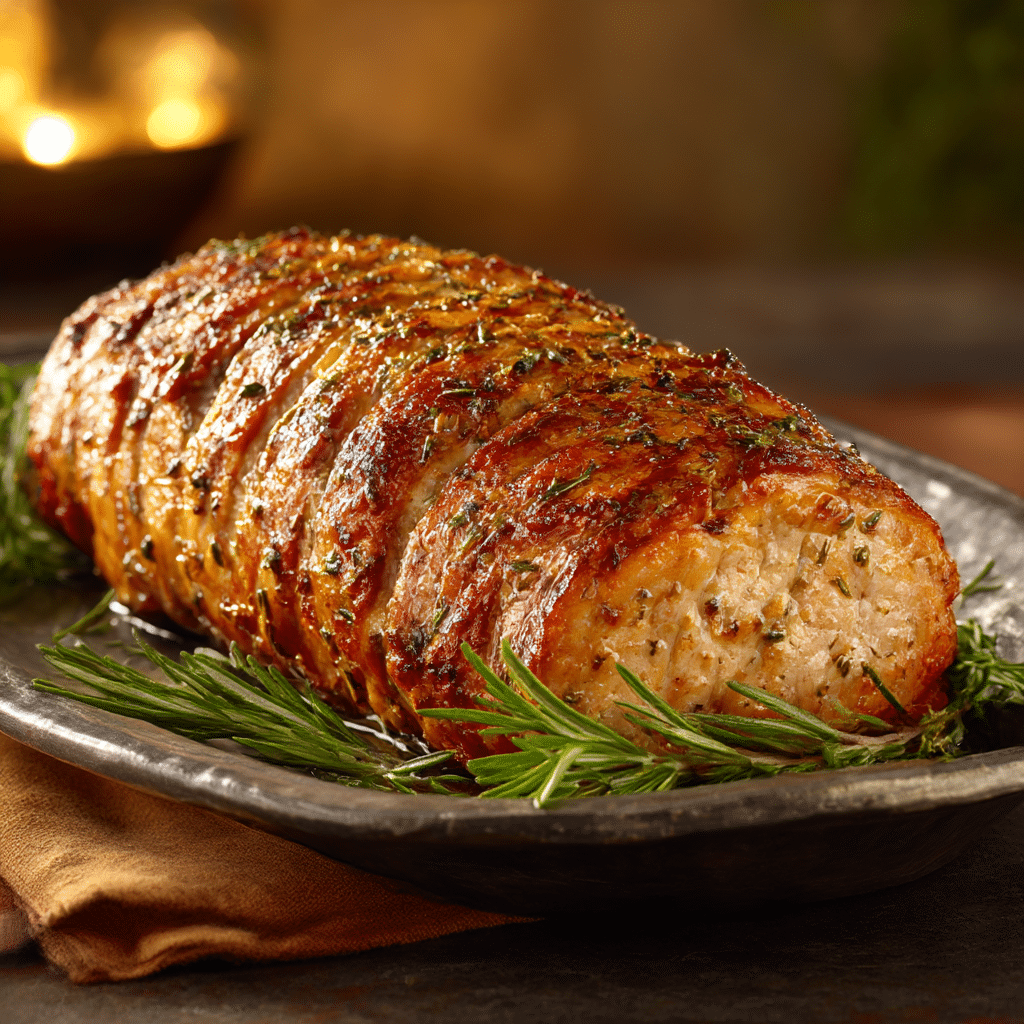
Garlic Herb Roasted Pork Loin Recipe
If you’re looking to impress friends or simply treat yourself to a comforting, flavorful meal, the Garlic Herb Roasted Pork Loin is an absolute must-try. This dish blends the warm, aromatic influence of fresh herbs and garlic with a sweet and tangy honey mustard glaze that caramelizes beautifully during roasting. Juicy, tender, and bursting with layers of savory goodness, this Garlic Herb Roasted Pork Loin transforms an everyday pork loin into something truly special and memorable.
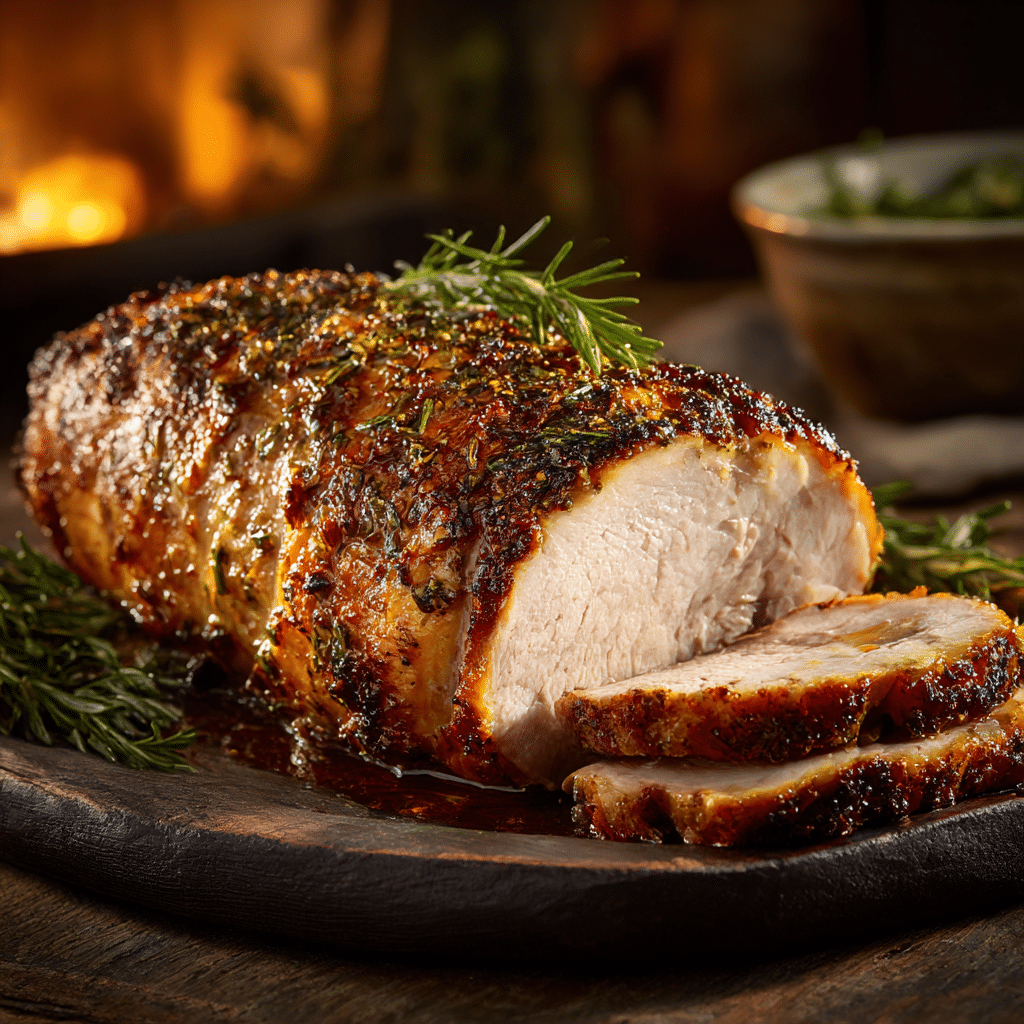
Ingredients You’ll Need
The magic of this Garlic Herb Roasted Pork Loin lies in its simple yet thoughtful ingredients. Each one plays a crucial role, whether bringing depth, tenderness, or vibrant color to your plate. From fragrant spices to fresh vegetables, you’ll find everything you need to elevate this roast with ease.
- Brown sugar: Adds a subtle sweetness that balances the savory spices and helps create a caramelized crust.
- Ground ginger: Brings a warm, zesty note that complements the pork beautifully.
- Ground cumin: Introduces an earthy, slightly smoky flavor that enhances the overall spice mix.
- Garlic powder: Amplifies the garlicky essence, layering the roast with aromatic depth.
- Onion powder: Adds a mild yet savory undertone that rounds out the spice blend.
- Ground mustard: Gives a sharp, tangy edge that sharpens the flavor profile.
- Thyme leaves: Offers herbal brightness and a subtle woodsy aroma.
- Marjoram: Infuses a gentle, sweet herbaceous note that mellows the spices.
- Cayenne pepper and crushed red pepper: Provide just the right touch of heat to keep things lively without overpowering.
- Olive oil: Helps sear the roast perfectly and carries the flavors in the spice rub.
- Boneless pork loin roast (3½ to 4 pounds): The star of the show, tender and perfect for absorbing all these wonderful flavors.
- Potatoes, carrots, and onions: Roasted alongside the pork, they soak up all those savory juices and offer a delightful contrast in texture.
- Butter: Used in the glaze to provide richness and a silky texture.
- Minced garlic: Adds a punch of fresh garlicky flavor to the glaze.
- Pineapple or orange juice: Brings bright acidity and fruity sweetness to balance the glaze.
- Honey and spicy brown mustard: Combine for a tangy-sweet glaze with a subtle kick.
- Soy sauce: Contributes umami depth and a savory saltiness to the glaze.
- Ketchup: Adds tang and a hint of tomato richness to round out the glaze.
- Cider vinegar: Gives a gentle acidic punch that brightens the flavor.
- Freshly grated ginger: Enhances the glaze with fresh, zesty warmth.
- Kosher salt and fresh ground black pepper: Essential for seasoning and rounding out all flavors.
How to Make Garlic Herb Roasted Pork Loin
Step 1: Prepare and Season the Pork Loin
First things first, trim any excess fat thicker than a quarter inch from your pork loin to ensure even cooking and prevent flare-ups. Pat the meat completely dry with paper towels—the key to getting that beautiful sear later. In a small bowl, whisk together the brown sugar, ground ginger, cumin, garlic powder, onion powder, ground mustard, thyme leaves, marjoram, cayenne pepper, and crushed red pepper. This spice blend is where the flavor adventure begins. Rub it generously all over the pork loin, coating every nook and cranny. Once seasoned, pop the pork loin into the fridge and let it chill for 1 to 2 hours—this resting time allows the flavors to really sink in.
Step 2: Sear the Pork for a Golden Crust
Next, warm the olive oil in a heavy skillet or Dutch oven over medium-high heat. You’ll know it’s ready when a drop of water sizzles and pops on the surface. Carefully place the pork loin in the pan and sear it on each side until it develops that gorgeous golden-brown crust that locks in juices and adds rich flavor—a proud moment for any cook!
Step 3: Roast with Vegetables
Transfer your beautifully seared pork roast to a large roasting pan or casserole dish. Surround it with halved potatoes, chunky carrots, and halved onions—these root vegetables will soak up all the roast’s savory goodness. Slide everything into an oven preheated to 375 degrees Fahrenheit. Roast for about 1 to 1¼ hours, or until the internal temperature of the pork reaches 145 degrees. This slow roasting ensures a perfectly tender, juicy result with those vegetables coming out sweet and caramelized.
Step 4: Make and Apply the Honey Mustard Garlic Glaze
While your pork is roasting, prepare the glaze that will take this Garlic Herb Roasted Pork Loin to the next level. Melt the butter gently in a small saucepan and sauté the minced garlic for a minute to release its flavor. Pour in the pineapple or orange juice, honey, spicy brown mustard, soy sauce, ketchup, cider vinegar, and fresh or dried ginger. Stir everything together and season with salt and pepper. Let this mixture simmer on low for 2 to 3 minutes to thicken slightly. Baste the roast generously with this glaze every 15 to 20 minutes during the roasting process. The glaze caramelizes beautifully, giving the pork a sticky, irresistible finish.
Step 5: Rest Before Serving
Once the roast hits that perfect internal temperature, remove it from the oven but don’t rush to slice it just yet. Tent it loosely with foil and let it rest for about 15 minutes. This crucial step allows the juices to redistribute, ensuring every bite is juicy and tender. Meanwhile, admire the fragrant kitchen and prepare to enjoy a dish that’s truly worth the wait.
How to Serve Garlic Herb Roasted Pork Loin
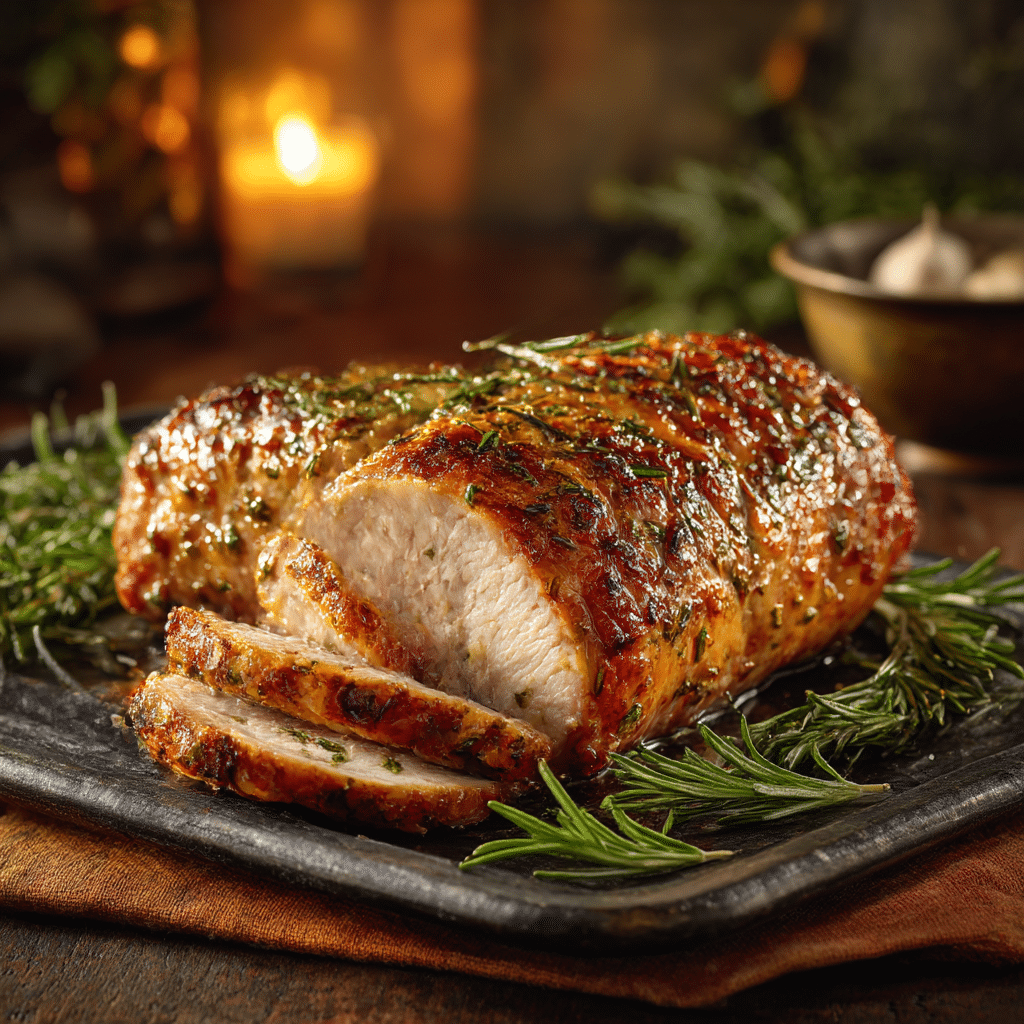
Garnishes
A sprinkle of freshly chopped parsley or thyme leaves on top immediately brightens the plate with a fresh pop of green and subtle herbal aroma. For an extra touch of elegance, a few thin lemon slices or a light drizzle of olive oil can elevate the presentation and add a zesty contrast to the rich pork.
Side Dishes
Roasted root vegetables naturally play star roles alongside the Garlic Herb Roasted Pork Loin, but you can also serve it with creamy mashed potatoes or a refreshing apple and fennel slaw. A simple green salad with a citrus vinaigrette cuts through the richness perfectly, while a wild rice pilaf adds beautiful texture and nuttiness to the meal.
Creative Ways to Present
Rather than just slicing and plating, try serving the pork over a bed of roasted vegetable medley or nestled atop garlic-infused mashed potatoes for a rustic yet refined look. You can also cut the pork loin into thick medallions and skewer them with roasted vegetable chunks for an attractive, shareable presentation that’s perfect for casual entertaining.
Make Ahead and Storage
Storing Leftovers
Cool any leftover Garlic Herb Roasted Pork Loin to room temperature within two hours of cooking, then store in an airtight container in the refrigerator. It will keep well for up to 4 days, making it perfect for tasty lunches or quick dinners later in the week.
Freezing
You can freeze cooked pork loin slices wrapped tightly in plastic wrap and placed in a freezer bag or sealed container. For optimal flavor and texture, consume within 2 to 3 months. Thaw overnight in the fridge before reheating to keep the pork juicy and tender.
Reheating
Reheat leftovers gently in a low oven (around 300 degrees Fahrenheit) covered with foil to prevent drying out, or warm slices in a microwave with a damp paper towel on top to retain moisture. Reheating slowly preserves that luscious texture and flavor of your Garlic Herb Roasted Pork Loin.
FAQs
Can I use bone-in pork loin instead of boneless?
Absolutely! Bone-in pork loin can be used and often adds extra flavor. Just increase the roasting time slightly and use a meat thermometer to ensure it reaches 145 degrees Fahrenheit internally.
What’s the best way to check for doneness?
The most reliable method is using a meat thermometer. Insert it into the thickest part of the pork loin and remove the roast once it hits 145 degrees. This ensures safety and juicy tenderness without overcooking.
Can I make the glaze ahead of time?
Yes! The honey mustard garlic glaze can be prepared a day in advance and stored in the fridge. Just warm it gently before using it to baste the pork during roasting.
What can I substitute if I don’t have pineapple or orange juice?
If you don’t have either juice on hand, apple juice or even a splash of white grape juice works wonderfully to provide the necessary acidity and sweetness in the glaze.
Is it necessary to baste the pork loin? What if I skip it?
Basting adds a glossy, caramelized glaze and infuses extra flavor, but if you’re in a pinch, the roast will still be delicious without it. Just expect a slightly drier exterior and less intense glaze flavor.
Final Thoughts
If you want a dish that combines ease with a truly show-stopping flavor, this Garlic Herb Roasted Pork Loin fits the bill perfectly. It’s one of those recipes that feels like a warm hug on a plate, with endless opportunities to personalize and impress. Trust me, once you try this recipe, it will become a beloved favorite you’ll return to time and again. So go ahead, roll up your sleeves, and enjoy the delicious journey of making this spectacular roast.