Greek Salad Recipe
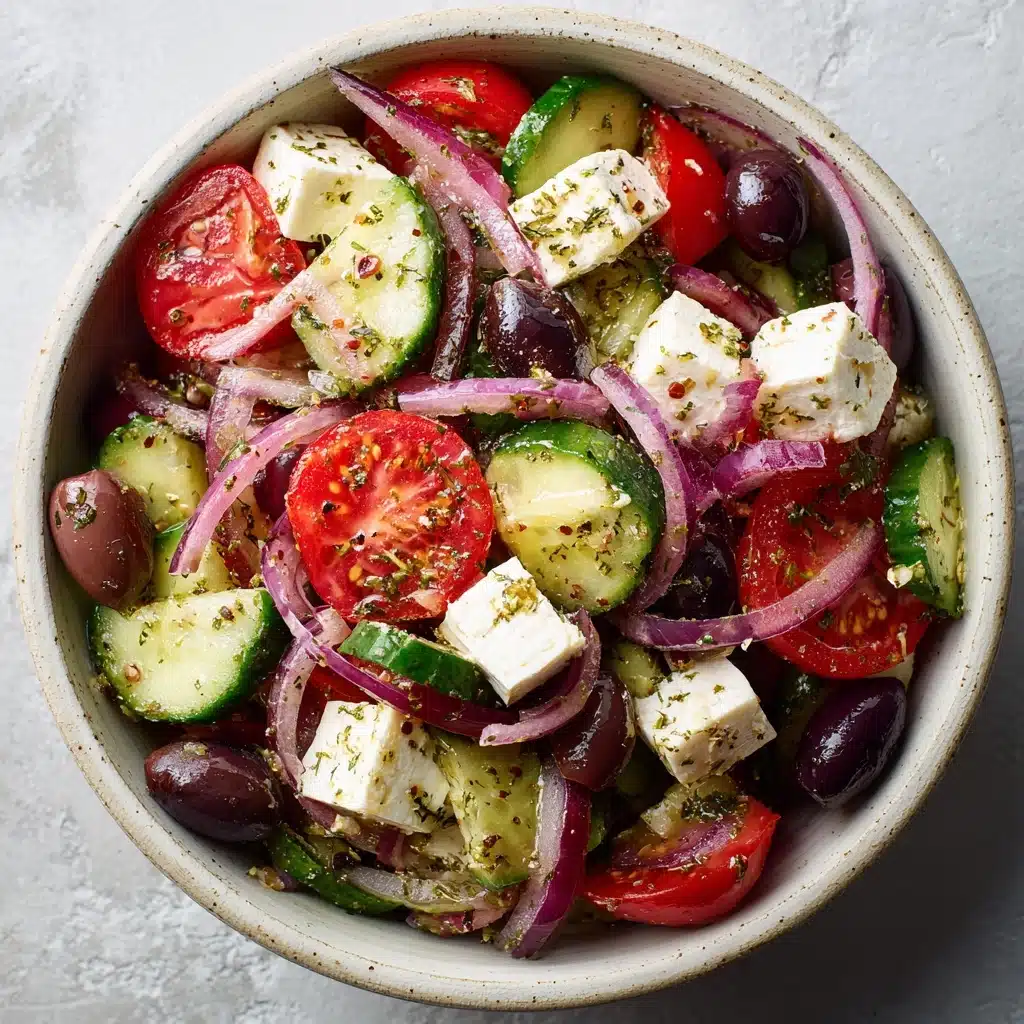
If you want a dish that bursts with Mediterranean sunshine in every bite, this Greek Salad is a must-try. Crisp cucumbers, juicy tomatoes, sharp red onions, and briny Kalamata olives come together with creamy feta cheese and a vibrant dressing of olive oil, lemon juice, and oregano to create a colorful, crunchy, and tangy delight. This Greek Salad perfectly captures the fresh, simple flavors of Greece, making it an effortless yet standout addition to any meal or a stellar light lunch on its own.
Ingredients You’ll Need
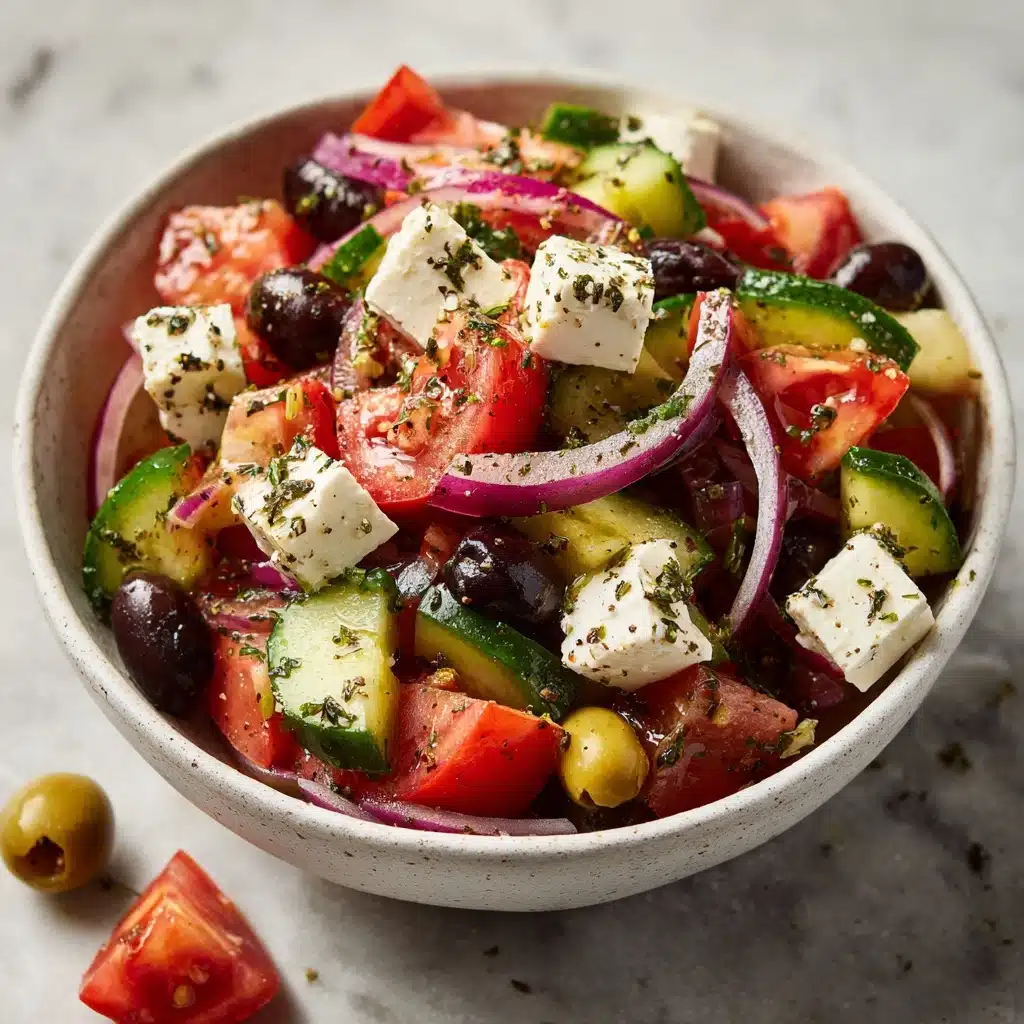
This Greek Salad depends on a handful of simple, staple ingredients that each play a vital role. From the fresh, crisp vegetables to the savory olives and creamy feta, every component complements one another to deliver balance and texture.
- 1 cucumber, diced: Adds a refreshing crunch and a mild flavor that’s perfect for salads.
- 2 tomatoes, chopped: Juicy and sweet, they bring vibrant color and natural sweetness.
- 1/2 red onion, thinly sliced: Offers a subtle sharpness and a beautiful purple hue.
- 1/4 cup Kalamata olives: The salty, slightly fruity olives are a signature Greek Salad ingredient.
- 100 g feta cheese: Creamy and tangy, feta ties the salad together with rich flavor.
- 2 tbsp olive oil: The dressing’s heart, providing smoothness and healthy fats.
- 1 tbsp lemon juice: Fresh lemon juice adds brightness and a slight zing.
- 1 tsp dried oregano: Classic herbaceous notes that define the Greek Salad’s authentic taste.
How to Make Greek Salad
Step 1: Prepare the Vegetables
Start by washing all the fresh produce thoroughly. Dice the cucumber into bite-sized pieces and chop the ripe tomatoes into chunks. Thinly slice half a red onion into delicate rings to ensure they don’t overpower the salad but add just the right amount of bite.
Step 2: Combine Vegetables and Olives
In a large bowl, toss together the cucumbers, tomatoes, and sliced onion with the Kalamata olives. This mixture is the colorful and flavorful base of your Greek Salad.
Step 3: Dress the Salad
Drizzle the olive oil and lemon juice over the vegetable and olive mixture. Sprinkle the dried oregano evenly on top, then gently toss everything to coat all the ingredients beautifully with the zesty dressing. The olive oil and lemon juice marry perfectly to bring out the freshness of the vegetables.
Step 4: Add Feta Cheese
Finally, crumble or crumble large chunks of feta cheese over the salad. The creamy, salty feta is the crowning glory, providing a delightful contrast in texture and flavor that makes the Greek Salad so irresistible.
How to Serve Greek Salad
Garnishes
For an extra touch of freshness, scatter some chopped fresh parsley or a sprinkle of freshly cracked black pepper on top. You can also add a few slivers of fresh mint for a cooling effect that beautifully complements the tangy dressing.
Side Dishes
Greek Salad pairs wonderfully with grilled meats like chicken souvlaki, lamb kebabs, or even crispy falafel. It also shines alongside fresh crusty bread or warm pita for a light, Mediterranean-inspired meal.
Creative Ways to Present
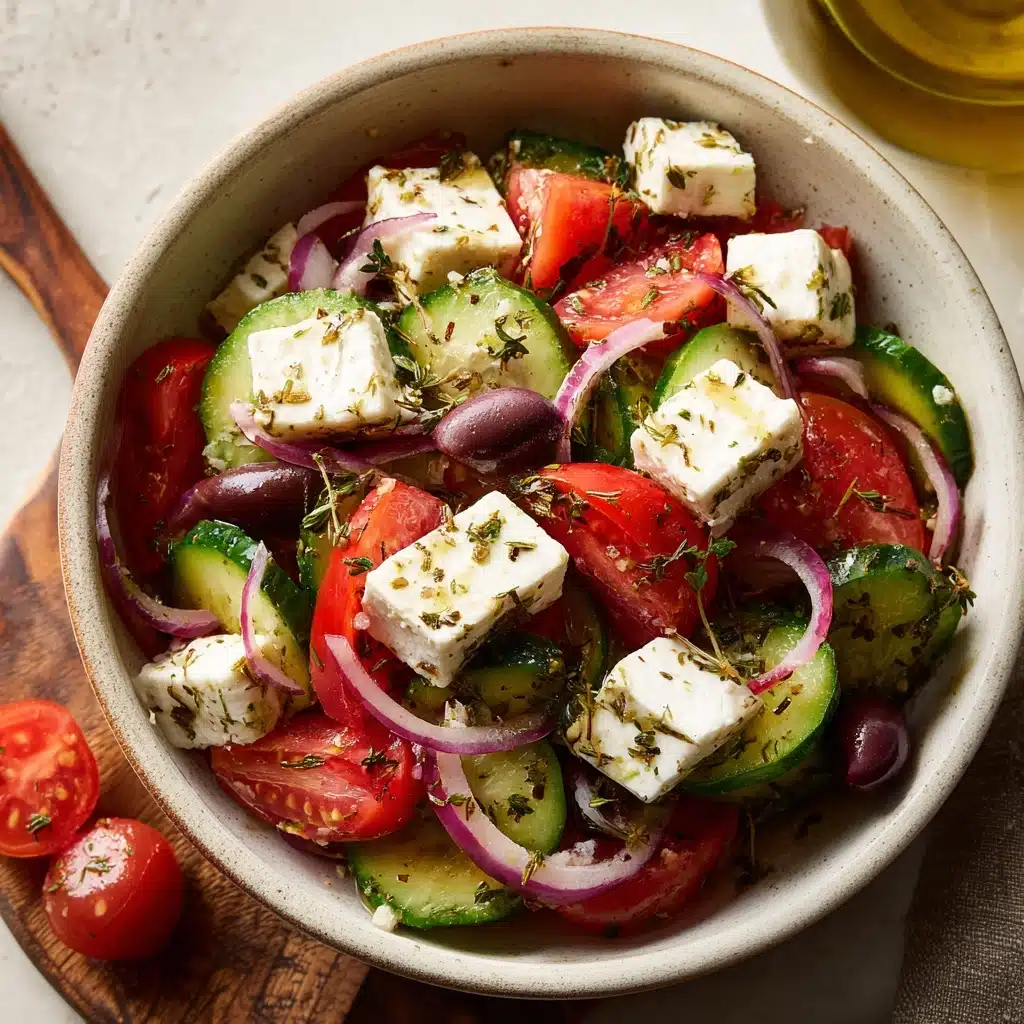
Serve the Greek Salad in a rustic wooden bowl to enhance its Mediterranean vibe or layer it in a clear glass salad bowl to show off its vibrant colors. For a fun twist, try serving it as a topping on toasted baguette slices for a quick and tasty appetizer.
Make Ahead and Storage
Storing Leftovers
If you have leftovers, place the Greek Salad in an airtight container and refrigerate it for up to one day. It’s best enjoyed fresh since the cucumbers and tomatoes release water over time, which can dilute the flavors and affect the texture.
Freezing
Because Greek Salad relies on fresh vegetables and feta cheese, freezing is not recommended. The texture of cucumbers and tomatoes becomes mushy upon thawing, and the cheese can lose its consistency.
Reheating
This salad is always best served cold. Reheating is unnecessary and will compromise the fresh crunch and flavors that make Greek Salad so delightful.
FAQs
Can I use fresh oregano instead of dried?
Absolutely! Fresh oregano provides a more vibrant and herbaceous flavor. Use about a tablespoon of finely chopped fresh oregano in place of the dried to keep that authentic taste.
Is Greek Salad gluten-free?
Yes, Greek Salad is naturally gluten-free, making it a fantastic option for those with gluten sensitivities or celiac disease.
Can I add other vegetables to this salad?
Definitely! While the traditional Greek Salad sticks to the core ingredients, adding bell peppers or radishes can add extra crunch and color if you want to experiment.
What type of feta cheese should I use?
Authentic Greek feta made from sheep’s milk or a blend of sheep and goat milk has the best flavor and texture. Avoid processed feta varieties for the most delicious and creamy result.
How can I make the dressing more tangy?
Simply increase the lemon juice slightly or add a splash of red wine vinegar to give the dressing a sharper, more pronounced tang without overpowering the salad.
Final Thoughts
Making this Greek Salad is like capturing a little taste of the Mediterranean in your own kitchen — fresh, vibrant, and full of character. Whether you’re looking to brighten up your lunch or need a stunning side dish for dinner, this recipe is effortless and delicious. Give it a go, and you’ll soon see why Greek Salad holds a special place on so many tables around the world.